Posts

A Quick Guide To Caring For Your Lawn In The Summer

Image
Image source: Pixabay.com   Summer is always a great time to enjoy green scenery and marvel at the beauty of the great wide outdoors. The same season, however, can be a major challenge in keeping lawns maintained, as the temperatures can soar and there isn’t enough rainfall for the grass and plants. During this time, lawns also have enough interaction with barbecue parties, games, and running feet. Here’s a mini summer lawn care guide. Water the right way Give your lawn at least an inch of water weekly, or more once it gets hotter. A rain gauge or straight-sided helps keep track of the water level and amount from rainfall as well as irrigation. Water deeply yet less frequently to support drought-tolerant roots, and water early in the day for reduced evaporation and growth of fungi. Feed depending on the phase of summer In early summer, strengthen the lawn to withstand the heat and drought through feeding with a reliable fertilizer suitable to all grass t...

Allergy-Proofing a Garden

Image
The garden has become a source of allergens, and this is a common problem among homeowners. Whether they themselves are allergic or other residents of the household, having allergies can sometimes be a hassle, and can prevent people from fully enjoying their homes.  Image source: fivestarlandscape.com However, there is a way to allergy-proof the garden. All it takes is a bit of research and the right choice of plants. For example, there are plants that don’t depend on the wind to pollinate. While this may be disheartening, since the list excludes a huge amount of trees, flowers, shrubs, and grasses, many equally beautiful plants are non-flowering and rely on insects for pollination.  If a person’s heart is set on having flowers though, then a bit of landscaping might be in order. Flowers need to be placed as far away as possible from doors to the house, or windows near the bedrooms. The same goes for other wind-pollinated plants.  Oyster-shell a...

Why Preventing Backflow Is Important

Image
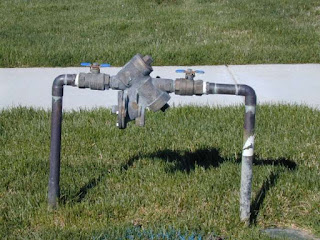
Back in 1973, the U.S. Environmental Protection Agency enacted the “Safe Drinking Water Act” to safeguard public water systems from being contaminated by unwanted particles or pollutants due to cross-connections or backflow. This is a significant concern for farms and lawns using irrigation systems. Image source: mesaaz.gov Overseeing backflow has become so crucial that even an official organization, American Backflow Prevention Association (ABPA), was established to make sure that backflows are prevented. The association with more than one thousand members defines backflow as “the undesirable reversal of flow of non-potable water (irrigation water or other treated water) through a cross-connection and into the piping of a public water system or consumer’s potable (drinking) water system.” Backflow can have two causes: backpressure backflow and backsiphonage. Backpressure backflow occurs when downstream pressure, particularly from the irrigation system, becomes greate...

What Exactly Is The Role Of Irrigation In Agriculture?

Image
Irrigation is of value especially for communities that could be facing the effects of drought.  It is defined as the artificial application of water to soil, in the appropriate amounts and frequency, to cause optimal soil infiltration and plant growth.  The conditions to take into consideration are soil type, vegetation, size of the area to be irrigated, water pressure, and local circumstances.  Image source: clwa.org The increase in agricultural production and productivity is highly dependent on the availability of water.  Insufficient, inconsistent, and uncertain rain is causing unpredictability in agriculture.  In some parts of the world, rain is restricted to only a few months in a year, and there are times when these rains don’t come as expected, causing areas of the country to experience drought.  Irrigation assists in effectively controlling drought and famine.  In irrigated lands, a higher rate of productivity is experienced as c...

Top tips for a truly fun-filled gardening hobby

Image
Whether you’re a beginner or have been into gardening for quite some time, you’d surely benefit from the tips below. Here are ways to make the hobby more worthwhile and fun.  Image source: flolly.com One is do your gardening with others . In other words, don’t go solo; share the fruits of your labor and knowledge with a neighbor, friend, or family member. Gardening is a great way to start a conversation. Discussing plants and meth0ds of refining garden techniques with others will regain our connectedness with others. This is especially beneficial in these times of social media and the internet. Speak with people; build friendships and enjoy the hobby more.  On a more practical sense, you could write down your plan for your garden for the new year . Consider what you grew the previous one and make little, more adventurous adjustments. And not only in crop type and variety; writing down your plan can lead you to finally getting that new gardening tool, n...

Why Fertilizing Plants Matters

Image
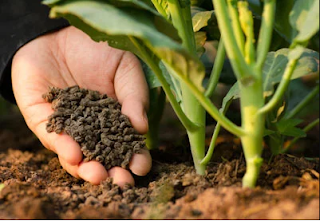
Why do farmers and gardening enthusiasts use fertilizers?  This seems like a no-brainer, but one that is less frequently addressed than it should be. For starters, all the nutrients in food come from the soil.  Creating healthy crops and plants means amassing nutrients and working with healthy soil.  Soils contain nutrients such as nitrogen, phosphorus, calcium, and potassium.  Without them, plants suffer from nutrient deficiencies and stop growing, unable to function properly and produce the necessary output. Image source: PlanetNatural.com   Fertilizers provide plant nutrients – they are exactly the plant nutrients applied to gardens or agricultural fields.  They have been used since ancient times.  Native Americans had used crude fertilizers such as burying a fish in their corn plots. Fertilizers are counted on to increase crop yield and improve poor-quality land.  Manure improves soil texture, recycles nitrogen, and introdu...